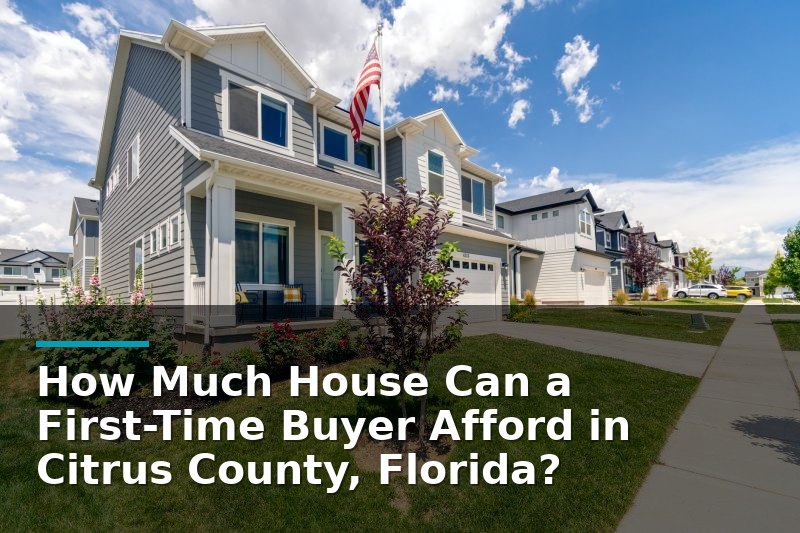
Trying to set a home-buying budget can feel frustrating when online calculators leave out real…
First-Time Home Buying: 8 Common Myths Debunked

By Matt Bouchard, Mortgage Broker | NMLS #140807
Buying a first home can feel intimidating when advice from friends, social media, and online calculators points in different directions.
First-time homebuyers do not always need perfect credit or a 20% down payment, but they do need a realistic plan based on current loan guidelines and their financial circumstances.
We will break down eight common home-buying myths, explain how major loan programs differ, and outline practical steps for preparing to buy in Citrus County and nearby Florida communities.
Key Takeaways
- Down Payment: Some eligible buyers may qualify for conventional financing with 3% down, FHA financing with 3.5% down, or VA and USDA financing with no required down payment.
- Credit: Perfect credit is not required, although credit history can affect eligibility, pricing, and mortgage insurance.
- Preparation: A mortgage pre-approval can clarify the budget, estimated cash needed, and potential loan options before serious home shopping begins.
- Costs: Buyers should plan for more than the down payment, including closing costs, inspections, insurance, taxes, and possible reserves.
- Guidelines: Loan requirements vary by program, lender, property, and borrower scenario and should be verified using current information.
At MSB Home Loans (NMLS# 2166082), we help first-time buyers compare mortgage programs and prepare for the financing process. As a small independent mortgage broker headquartered in Homosassa, we work directly with borrowers rather than routing them through a call center.
Quick Answers for First-Time Homebuyers
- Do first-time buyers need 20% down? No. Several mortgage programs allow qualified borrowers to buy with substantially less, and certain programs offer no-down-payment financing.
- Is perfect credit required? No. Each program has different credit guidelines, and lenders may apply additional requirements.
- Should buyers get pre-approved before touring homes? It is usually helpful. Pre-approval provides a working price range and identifies documentation or credit issues that may need attention.
- Can a seller help with closing costs? Often, yes. Seller contributions may be permitted within program limits, but they must be negotiated in the purchase contract and approved by the lender.
Myth 1: Every First-Time Buyer Needs 20% Down
A 20% down payment can reduce the loan balance and may eliminate private mortgage insurance on a conventional loan, but it is not a universal requirement.
Eligible borrowers may have access to conventional loans with as little as 3% down, FHA loans with 3.5% down, and VA or USDA loans with no required down payment. Eligibility, property requirements, occupancy rules, and lender guidelines still apply.
A smaller down payment is not automatically the right choice for every buyer. We look at the full financial picture, including available savings, monthly payment comfort, mortgage insurance, emergency reserves, and planned home expenses.
Myth 2: First-Time Buyers Must Have Perfect Credit
Mortgage underwriting considers more than a single credit score. Lenders may review payment history, credit utilization, recent inquiries, collections, bankruptcies, housing history, debt obligations, and the amount of cash available for the transaction.
Stronger credit can improve available loan options and pricing, but less-than-perfect credit does not automatically end the conversation. FHA, VA, USDA, and conventional loans each use different guidelines. Individual lenders can also set requirements beyond the underlying program rules.
Before applying, buyers can review their credit reports for errors and avoid opening unnecessary accounts. Paying every account on time and keeping revolving balances manageable may also support a stronger application, although no single action guarantees approval or a particular score increase.
Myth 3: Renting Is Always Cheaper Than Buying
Comparing rent with only a mortgage principal-and-interest payment creates an incomplete picture. Homeownership costs may also include property taxes, homeowners insurance, flood insurance when applicable, mortgage insurance, association dues, utilities, maintenance, and repairs.
Renting can be the practical choice when flexibility is a priority or when savings and credit need more time. Buying may make sense when the payment is sustainable, the buyer expects to remain in the home long enough to justify transaction costs, and adequate reserves remain after closing.
For properties in Homosassa, Crystal River, Inverness, Lecanto, or other parts of Citrus County, insurance and flood-zone considerations can materially affect the monthly budget. We recommend reviewing property-specific insurance estimates before finalizing a purchase decision.
Myth 4: Pre-Qualification and Pre-Approval Are the Same
These terms are sometimes used differently across the mortgage industry, but they generally describe different levels of review.
- Pre-qualification is commonly based on borrower-provided information and may involve a limited review.
- Pre-approval typically includes a credit review and examination of documents such as income, assets, and employment information.
A pre-approval is not a loan guarantee. Final approval usually depends on updated borrower documentation, an acceptable property, appraisal results, title work, insurance, and satisfaction of underwriting conditions.
Starting early provides time to compare options and address potential issues before making an offer. Buyers can review the broader range of available mortgage loan options as part of that planning process.
Myth 5: FHA Loans Are Only for Buyers With Bad Credit
FHA loans are not limited to borrowers with credit challenges, and they are not restricted to first-time buyers. They may be considered by buyers who value a lower minimum down payment, more flexible qualifying guidelines, or certain property and refinance features.
FHA financing includes mortgage insurance requirements that affect upfront costs and monthly payments. The property must also meet applicable FHA standards.
A conventional loan may offer advantages for some buyers, while an FHA home loan may be a better structural fit for others. We compare total payment, cash needed, mortgage insurance, credit profile, and long-term plans rather than choosing a program from one feature alone.
Myth 6: The Down Payment Is the Only Cash Needed
The down payment is one part of the cash-to-close calculation. Buyers may also need funds for closing costs and prepaid expenses.
Common items include:
- Lender and settlement-related charges
- Appraisal and credit-related costs
- Title services and recording charges
- Prepaid homeowners insurance
- Property tax and insurance escrow deposits
- Home inspection and specialized inspection costs
- Association-related charges when applicable
Fees vary by lender, property, loan size, county, and transaction structure. A Loan Estimate provides an itemized early estimate after a completed application and other required information have been submitted.
Seller contributions, lender credits, and eligible gift funds may help in some transactions, but each option comes with rules and tradeoffs. Credits tied to a higher interest rate, for example, should be reviewed in the context of both upfront savings and longer-term cost.
Myth 7: All Mortgage Programs Work the Same Way
Loan programs differ in eligibility, down payment, mortgage insurance, occupancy, property standards, and underwriting approach. Understanding those structural differences helps buyers focus on realistic options.
| Loan Type | Typical Structure | Key Considerations |
|---|---|---|
| Conventional | Eligible first-time buyers may qualify with 3% down. | Credit, income, assets, conforming loan limits, and mortgage insurance guidelines apply. |
| FHA | A 3.5% minimum down payment is commonly available with qualifying credit. | Includes mortgage insurance and FHA property requirements. |
| VA | Eligible service members, veterans, and certain surviving spouses may qualify with no required down payment. | VA eligibility, entitlement, occupancy, appraisal, and lender requirements apply. |
| USDA | Eligible borrowers and properties may qualify with no required down payment. | Household income limits, property location, occupancy, and program rules apply. |
Current rates, fees, loan limits, mortgage insurance, and underwriting requirements change over time. Buyers should verify the latest program information with a licensed mortgage professional.
Myth 8: Buyers Should Find a House Before Discussing Financing
Waiting until after finding a property can create avoidable pressure. A buyer may learn that the estimated payment is higher than expected, certain income cannot be used as anticipated, or additional documentation is required.
Early mortgage planning helps establish a working budget, estimate cash needed, and identify loan conditions before an offer is submitted. It can also help buyers account for differences in taxes, insurance, association dues, and property type.
This is especially relevant when comparing homes across Citrus County, Hernando County, and Pasco County. A property in Sugarmill Woods, Brooksville, Weeki Wachee, or Spring Hill may carry different insurance, tax, association, or flood-related considerations even at a similar purchase price.
A Practical First-Time Homebuyer Checklist
- Review income and employment documentation. Gather recent pay information, tax forms, and any documentation related to variable or self-employed income.
- Check credit reports. Look for errors, unfamiliar accounts, and balances that may need attention.
- Organize asset statements. Lenders typically need to document funds used for the down payment, closing costs, and reserves.
- Build a complete monthly budget. Include taxes, insurance, mortgage insurance, association dues, utilities, and maintenance.
- Compare appropriate loan programs. Evaluate cash needed, monthly payment, eligibility, and longer-term cost.
- Request pre-approval. Submit requested documentation and discuss any conditions or unanswered questions.
- Shop within a comfortable range. The maximum amount available under underwriting guidelines does not have to become the target purchase price.
- Review property-specific costs. Obtain insurance information and complete appropriate inspections before closing.
How We Help First-Time Buyers Prepare
With over two decades in the mortgage industry, we understand that the first step is often a conversation rather than a formal application. We can review the buyer’s goals, explain documentation requirements, compare available wholesale lending options, and outline potential next steps.
We are an independent mortgage broker rather than a bank or retail lender, and we use the Arive pricing engine to shop options across multiple lenders. Available pricing and programs depend on the borrower’s qualifications, property, occupancy, and current market conditions.
If you are considering a home in Citrus County, Hernando County, or Pasco County, we invite you to call, text, or email us. We can review your scenario, compare potential financing options, and help you understand what to address before requesting a pre-approval or making an offer.
Frequently Asked Questions
Can someone qualify as a first-time buyer if they owned a home before?
Possibly. Many programs define a first-time homebuyer as someone who has not owned a principal residence during the previous three years, although definitions and exceptions vary. Prior ownership should be reviewed against the rules of the specific loan or assistance program.
Can gift funds be used to buy a first home?
Many mortgage programs permit eligible gift funds for some or all of the down payment and closing costs. The donor, transfer, documentation, and borrower-contribution rules vary by loan program, so the gift should be discussed with the lender before funds move.
How are student loans treated during mortgage underwriting?
Student loan obligations are generally included in the debt-to-income calculation, even when payments are deferred or temporarily set to zero. The payment used depends on the loan program, credit report, documentation, and current guidelines.
Can a first-time buyer finance a manufactured home?
Financing may be available when the manufactured home, land, foundation, title, age, and condition meet the applicable program and lender requirements. These transactions often require additional property documentation, so buyers should confirm eligibility before making an offer.
Does changing jobs before closing affect a mortgage application?
It can. A change in employer, pay structure, hours, occupation, or employment status may require new documentation and another underwriting review. Buyers should discuss a planned job change with their loan originator before making the change whenever possible.
This is educational and not financial advice. Loan programs and guidelines can change. Talk with a licensed mortgage professional about your specific scenario.

About the Author
Matt Bouchard
Mortgage Broker at MSB Home Loans · NMLS #140807
I grew up in a small suburb of Flint, Michigan—the eldest of four kids, raised by a Vietnam veteran dad who worked the line at GM and a stay-at-home mom who kept our busy household running. That blue-collar upbringing taught me the value of hard work, straight talk, and treating people right.
Specializes in: First Time Buyers, Conventional Loans, VA Loans
Licensed in: FL, MI
Related Posts