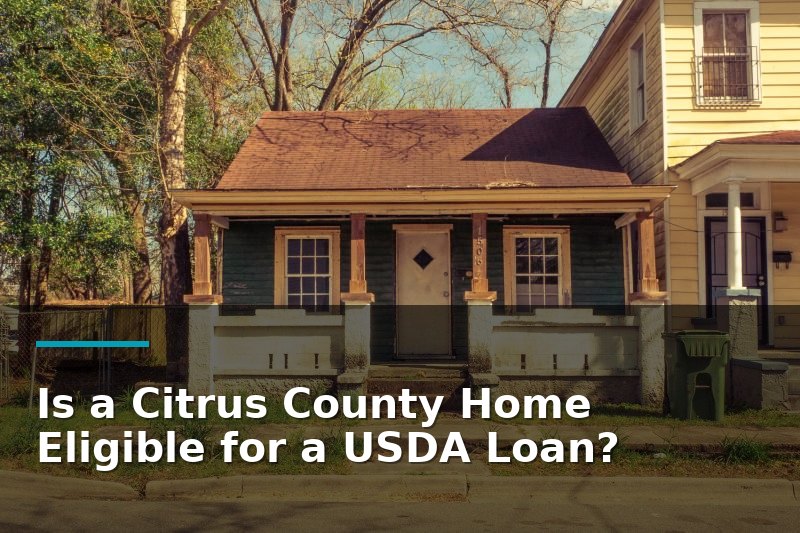
Florida USDA Loans: Advantages for Rural Homebuyers in Citrus County
Searching for a home in Citrus County, Florida, can be an exciting step, but finding affordable financing—especially with limited down payment funds—can feel like a roadblock. USDA loans are government-backed mortgages designed to help low-to-moderate-income borrowers buy homes in designated rural areas with no down payment required. In this guide, you’ll learn exactly what a USDA loan is, who qualifies in Citrus County and nearby areas, and why this program can be a great option for homebuyers looking to put down roots outside busy cities.
Key Takeaways
- Purpose: USDA loans are designed to make homeownership possible in rural and some suburban areas with zero down payment.
- Requirements: Eligibility includes location, household income limits, and property standards set by USDA guidelines.
- Benefits: Often features below-average mortgage insurance costs and more lenient credit standards than many other loan types.
- Timeline: USDA approval adds extra steps that may slightly extend closing, often by a few days compared to other loan programs.
- Best For: First-time buyers, move-up buyers, and those seeking an affordable home in places like Homosassa, Crystal River, Brooksville, and Lecanto.
What Is a USDA Loan?
A USDA loan, officially called a USDA Rural Development Guaranteed Housing Loan, is a mortgage backed by the U.S. Department of Agriculture to support homeownership in eligible rural areas. The program helps buyers who may not have large savings for a down payment, and it’s known for its flexible qualification standards and competitive rates compared to other low or zero-down financing options.
Unlike FHA, VA, or conventional loans, USDA loans require no down payment if you meet the program guidelines and buy in a qualifying area. The USDA mortgage is available through approved lenders; you work with a mortgage broker like MSB Home Loans (NMLS# 2166082) to navigate the application and USDA approval steps.
Who Qualifies for a USDA Home Loan?
USDA home loan eligibility depends on these core factors:
- Location: The home must be in a USDA-eligible area, generally defined as rural and some suburban addresses. Much of Citrus, Hernando, and Pasco counties—including Homosassa, Crystal River, Inverness, Lecanto, Brooksville, and surrounding areas—meet the USDA rural/town guidelines.
- Income Limits: Because the program targets lower and moderate-income buyers, household income generally must be at or below 115% of the area median income. Income calculations include all adult household members, not just the borrower(s).
- Occupancy: You must plan to live in the home as your primary residence; USDA loans are not for second homes or investment properties.
- Property Standards: Homes must meet USDA safety and livability guidelines—comparable to FHA standards, ensuring the property is safe and structurally sound.
- Credit Criteria: While requirements vary by lender, USDA loans can be more flexible on credit scores than many conventional options, sometimes making them accessible to buyers with less-than-stellar histories.
It’s important to check current eligibility maps and income limits with your lender, as guidelines are updated periodically.
Advantages of USDA Loans for Buyers in Citrus County and Nearby
- Zero Down Payment: Perhaps the biggest advantage—qualified borrowers can finance 100% of the home’s purchase price, a major benefit for buyers who haven’t saved a large down payment. This feature is especially helpful for first-time buyers and those moving up without equity from a current home.
- Competitive Mortgage Insurance Costs: Unlike FHA loans, USDA mortgage insurance—called a Guarantee Fee—typically has lower monthly costs as a percentage of your loan amount. This can save you money over time.
- Attractive Interest Rates: Because the USDA loan is government-backed, rates are often competitive with or even lower than many other low-down-payment options, depending on the lender and your credit.
- Lenient Credit & Qualification: Many lenders allow moderate credit scores and will review your recent credit history and payment patterns, giving some flexibility compared to stricter programs.
How Does the USDA Loan Process Work?
- Pre-Qualification: We assess your basic eligibility (location, income, preliminary credit review) and discuss what you’re looking for in Citrus County or nearby.
- Formal Application & Documentation: You submit your loan application, income/asset paperwork, and get matched with a USDA-eligible property.
- Processing & Underwriting: Your mortgage file goes through typical lender underwriting—including income, assets, debt ratios, credit, and property appraisal.
- USDA Commitment: After lender approval, your file is submitted to the USDA for a final review and loan ‘commitment.’ This step adds a few days to the process but is required for the government guarantee.
- Closing: Once USDA issues the commitment, you’ll sign the closing documents and receive your keys—often just a few days beyond a standard mortgage closing.
While this extra USDA review step can add some time to the process, many brokers in Citrus, Hernando, and Pasco counties (including us) are used to working with this timeline to avoid surprises or unnecessary delays.
Is a USDA Loan Right for Me?
USDA loans are a great fit if you have steady income within program guidelines, want to buy a home in a qualifying rural area, and need an affordable path to homeownership. They’re especially popular for:
- First-time home buyers who haven’t built up a down payment
- Borrowers upgrading homes and keeping cash on hand for relocation/repairs
- Veterans and military families (USDA is a good alternative when VA eligibility isn’t available)
- Anyone seeking to buy a single-family home in eligible areas of Citrus County and surroundings
Another plus—USDA loans can even be used for certain manufactured homes (if they meet USDA’s property criteria), opening the door to ownership for a wider range of buyers.
How USDA Loans Compare to Other Popular Programs
| Loan Type | Down Payment | Credit Criteria | Income Limits? | Eligible Properties |
|---|---|---|---|---|
| USDA | 0% (no down payment) | Often more flexible | Yes | Rural-eligible homes |
| FHA | 3.5% minimum | Flexible | None | Most properties |
| VA | 0% (for eligible vets) | Often flexible | None | Most homes |
| Conventional | 3% minimum | Stricter for low down payment | None (except for some programs) | Most properties |
Want to explore how USDA, FHA, and VA loans compare for your Citrus County home search? Talk with us about your eligibility and scenario.
Quick Answers: Common USDA Loan Questions
- Do I need to be a first-time buyer? No—USDA loans are open to eligible buyers regardless of homeownership history, as long as you don’t own another suitable home nearby.
- Can I use a USDA loan for new construction? In some cases, yes—USDA loans may allow new builds if the builder and property meet eligibility rules. Ask about specifics for Citrus, Hernando, or Pasco County.
- Are manufactured or modular homes eligible? Yes, if the home meets USDA guidelines for foundation and construction. Not all manufactured homes will qualify—your lender can help clarify.
- What about closing costs? USDA loans don’t eliminate closing costs, but you may be able to finance closing costs into your loan if the property appraises high enough, or ask the seller to help with them.
- How long does USDA approval take? The lender underwrites your loan first, then files with USDA for their commitment—a process that typically adds several days, but timelines can vary.
Getting Started with a USDA Loan in Citrus County
If buying in a community like Homosassa, Crystal River, Inverness, Lecanto, or Brooksville, a USDA loan could unlock affordable homeownership without the burden of a big down payment. The team at MSB Home Loans specializes in helping buyers understand eligibility, gather required documentation, and match your goals to qualifying homes in Citrus, Hernando, and Pasco counties.
Clients often ask whether a USDA, FHA loan, or conventional financing is the better fit; we’re happy to walk through the pros and cons based on your scenario. Our independent broker status means we can shop across multiple lenders, providing more options—and you always work directly with your loan originator, not a call center.
Ready to run through your USDA eligibility, compare options, and plan your next move? Call, text, or email us to schedule a free review—whether you’re just starting out, want a pre-approval letter in hand, or simply want an honest conversation about what’s possible for your next home in Citrus or the surrounding counties.
Frequently Asked Questions
What areas in Citrus County are typically USDA eligible?
Most of Citrus County—including Homosassa, Crystal River, Inverness, and Lecanto—often qualifies as USDA-eligible. USDA updates eligibility maps periodically, so always confirm your home's address with an updated search or your lender.
Do USDA loans require private mortgage insurance?
USDA loans include a Guarantee Fee, which functions similarly to mortgage insurance but is typically more affordable than most FHA options. This is paid both upfront and as part of your monthly payment.
Can I use gift funds for closing costs on a USDA loan?
Yes, USDA allows gift funds to help cover closing costs, as long as the source of the gift is documented. Many buyers combine this with seller contributions and, in some cases, roll eligible costs into the mortgage.
Are there loan limits for USDA mortgages?
Unlike conventional loans, USDA loans do not have explicit loan limits. However, your buying power is capped by debt-to-income ratios and household income eligibility, so talk with your loan officer about what fits.
Can I buy a fixer-upper with a USDA loan?
USDA loans require homes to meet certain property standards at closing, so major fixer-uppers may not qualify without repairs first. Some repairs can be completed before closing or financed with a special USDA renovation loan—ask your lender for details.
This is educational and not financial advice. Loan programs and guidelines can change. Talk with a licensed mortgage professional about your specific scenario.

Matt Bouchard
I grew up in a small suburb of Flint, Michigan—the eldest of four kids, raised by a Vietnam veteran dad who worked the line at GM and a stay-at-home mom who kept our busy household running. That blue-collar upbringing taught me the value of hard work, straight talk, and treating people right.
Related Posts